Renyao and Wild Beasts: Gender Crossing in Late Imperial China
They lived in an era with such a limited scope for social advancement; the lower-class men officially derided as “neither man nor woman,” “monsters,” or “beasts” chose to seek potential means of survival by disguising themselves and crossing gender boundaries.
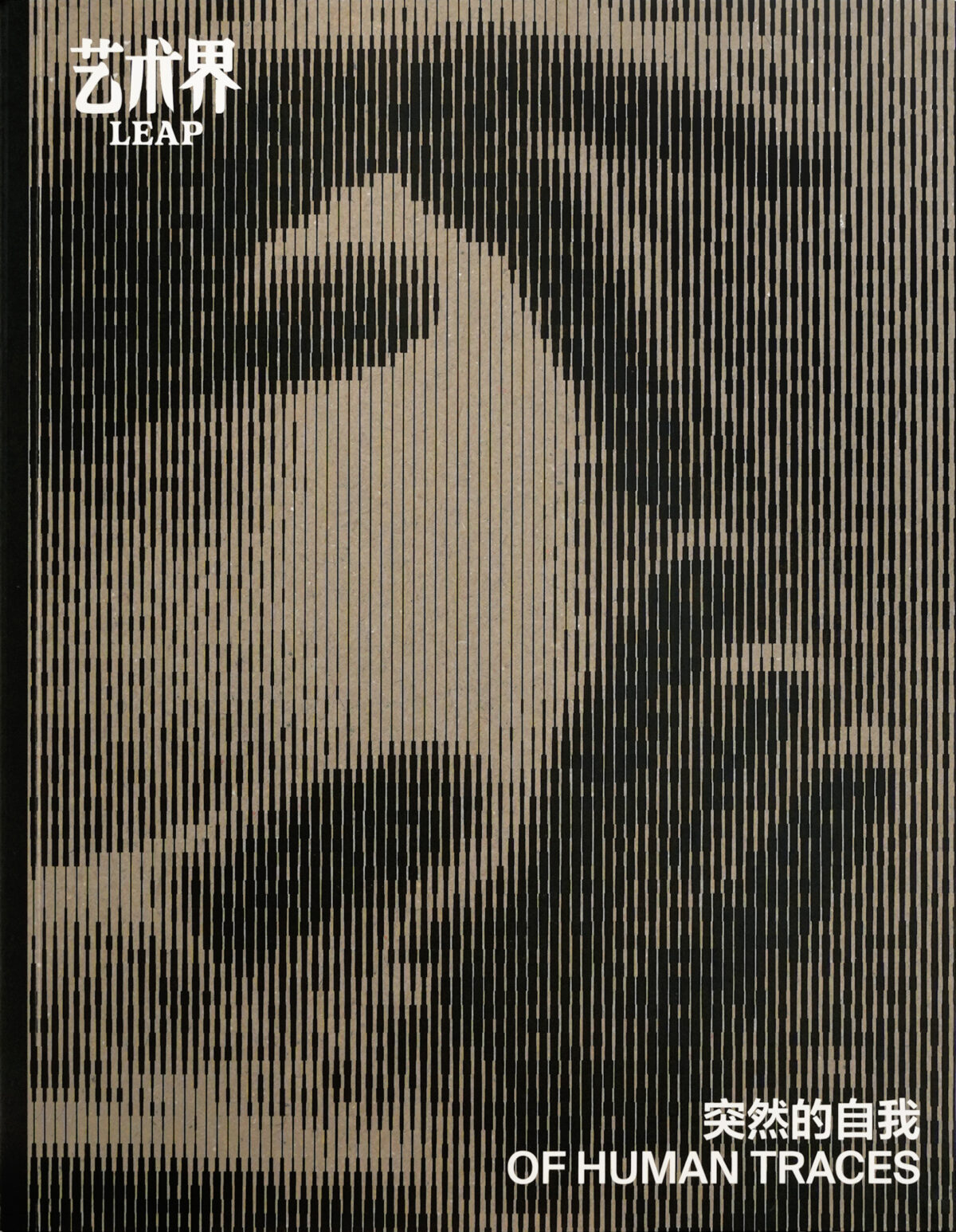
Read MoreLEAP S/S 2026 OF HUMAN TRACES
There is a quiet resistance in the act of paying attention. We live in an era increasingly enclosed by algorithmic efficiency, predictive optimization, and industrialized digital systems. Our devices know tomorrow’s weather before we look outside, calculate the fastest route home before we leave, and translate our sleep, moods, and health into neat streams of…
Read MoreA Book of Actions: Islands, Coastlines, and the Sea
In recent years, the field of contemporary Chinese art has seen a growing number of practice-based projects initiated by curators, artists, and institutions. Whether working alone during brief island or port residencies, or traveling collectively along expansive coastlines, these practitioners engage with long-standing maritime rituals—such as boat-sending ceremonies—and observe newly developed marine infrastructure.
Read MoreEndless Return under the Monsoon
The residues of these histories still drift within the everyday lives of Southeast Asian Chinese, rendering “localization” anything but a clear or uncontested option.
Read MoreTaming Adventures: The Haier Brothers as Global Imagery
Around the turn of the millennium, we accepted and embraced The Haier Brothers—whether actively or passively—not only because of its pervasive airtime, but because it had become a “prescribed image.”
Read MoreFrom Divine Maiden to Heavenly Empress: The Historical Formation of Mazu Belief and the Maritime Imaginary
Confucian moral instruction and the sea-goddess belief centered on Meizhou Island—systems that had once existed in relative independence and represented the divide between official and popular spheres, center and periphery, land and sea—gradually converged in the modern period, woven into a unified ideological formation.
Read MoreWhere the Tongue Catches on Stress: Sounds in Diaspora, Narrative at Its Limits
Cha, in her semi-conscious, ritualized writing, constructs fleeting linguistic sanctuaries for the fallen of her nation. Naipaul, by contrast, summons the ghosts of history back into the text, laying bare the delicate, exposed interior of the colonized subject.
Read MoreFrom Mutiny to Diplomacy: Colonial and Post-Colonial Foodways in the Indo-Pacific
Very often, even though the taste of home follows us, it is not necessarily home, and can also come from distant shores.
Read MoreNavigating through Loss at Sea—Beyond the Screens of Isaac Julien, Steve McQueen, Séverine Sajous and Anna Surinyach
For four artists, moving image becomes the tool to document loss in relation to the sea, capturing the complex narratives that exist beyond its uncontrollable nature.
Read MoreAll That Flows in the World: Notes on Osaka 2025
As I was told, once the last ecologically conscious pavilion has flat-packed its building and left, the site will be transformed into a major casino-resort. From the ruins of the Cloud rises a new totem to Capital.
Read MoreLEAP F/W 2025 ACROSS THE SEA
For LEAP, the sea is less a fixed entity than a medium—carrying people, myths, goods, languages, and images across vast distances. In LEAP’s Fall/Winter 2025 issue, “Across the Sea,” we approach the ocean not merely as a subject, but as a way of thinking: fluid, relational, and resistant to fixed borders. Against a world increasingly…
Read MoreThe Taste of Mountains—Stories from the Bamboo Grove
“Without bamboo, one becomes vulgar; without meat, one grows thin.”
Read MoreCommon Sense and Sacred Sites: Rethinking Ecological Art and Its Landscapes
This non-linear, anti-sovereign vision of landscape offers a path of learning in ecological art—not about “knowledge of mountains,” but about the ability to coexist with mountains.
Read MoreLiang Shuo: To “Peach Mountain,” and the Circulation of Zha
We’re always chasing what’s already been validated—those things that are constructed and explained by professionals—while neglecting the everyday.
Read MoreAn Exhibition About Exhibitions: Mountains and Ethnographies
Ethnography, then, is also a form of making—one that generates heterogeneity within the field itself. It dialogues with art at the level of practice—how reality is perceived, understood, and transformed. Indeed, it is such moments of entanglement, confusion, struggle, and vulnerability within concrete practices and research that often mark a shared point of departure for both artistic and ethnographic creation.
Read MoreMoving Mountains: Su Yu-Xin’s “Searching the Sky for Gold” and Contemporary Poetry of the Asian Diaspora
The paintings in “Searching the Sky for Gold” share the aesthetics of Asian American and diasporic Asian poets in the U.S. who in recent decades, write in response to historical atrocities. Across pages and canvases, the recurrent smoke-clouds, rings of dust, and licks of flames are entangled with the labor and persecution of Asian immigrants on the colonized land of America.
Read MoreThe Mountain That Hid
In every family, perhaps, there are skeletons in the closet. In ours, there is certainly that, and Granddad’s presence was like a mountain hiding in plain sight. It was there, silently sitting in the family for decades.
Read MoreBeyond Departure, Return, and Rootedness: Seeing the Southwest Chinese Women through the Independent Lens
In the end, the impoverishment we perceive in this image, like that of the southwest women portrayed, demands more than a passive acceptance of the established aesthetic formula. Unless we engage with these images in a way that is grounded in real emotion and lived experience, our seeing remains hollow.
Read MoreSeen and Remembered by the Mountains[1]: Polyphonies of Friendship in Liangshan
Crossing a single ridge reveals a myriad of differences, from the very soil to the local language. I have now resided here for two years, in this inland pocket between Sichuan and Yunnan. My sense of the place constantly evolves with its accumulating contrasts. My first lessons came from friends close by, whose practices seem rooted in the mountain soil itself.
Read MoreLEAP S/S 2025 TO THE MOUNTAINS
Mountains, as commonplace as they may seem, embody a quiet constancy imbued with vast symbolic resonance. They have loomed in our collective imagination as both refuge and challenge—sacred realms, geological fortresses, and sites of ancestral memory. In LEAP’s Spring/Summer 2025 issue, “To the Mountains,” we turn our gaze upward and inward, to engage with the…
Read More